A Treatise of English Particles, Shewing Much of the Variety of their Significances and Uses in English: And how to render them into Latine according to the Propriety and Elegancy of that Language. With a Praxis upon the same. By William Walker, B.D. Formerly Master of Louth School, and of the Free-School in Grantham.
Additional engraved title with the arms of Eton, Westminster, Winchester and St. Paul's.
Twelfth Edition. 8vo. [181 x 115 x 35 mm]. [8]ff, 461, [49] pp. Bound in contemporary sprinkled calf, the covers tooled in blind, with a double fillet border, an outer panel of a double fillet and floral roll, with a floral tool at the outer corners, mitred to an inner panel of a double fillet and floral roll. The spine divided into five panels with raised bands flanked by blind fillets, lettered in the second on a black label, the others with gilt ornamental centres, the edges of the boards tool with a blind roll, plain endleaves, red sprinkled edges. (Slightly rubbed with tip of one corner exposed).
London: printed by J. H. for E. Pawlett, at the Bible in Chancery-Lane, near Fleetstreet, 1703
A fine copy. With the armorial bookplate of the Right Hon. the Earl of Berkshire, Lord Marshall of England, dated 1720 and his ink inscription as Henry Howard. Henry Bowes Howard (1687-1757), 11th Earl of Suffolk and 4th Earl of Berkshire, resided at Charlton Park, near Malmesbury.
First published in 1655, ESTC locates only the BL copy in the UK and six in the USA. Walker's book was motivated by the difficulties encountered in learning the classical languages. Its main purpose was to show, by means of examples, how various propositions, conjunctions and adverbs are correctly used in Latin, Greek and Hebrew. The particles are arranged alphabetically, while their correct use is exemplified and their translation into Latin is provided. Referring to ancient sources, he likened speech with an organic body, and particles with the nerves and ligaments in the body.
Stock no. ebc9334

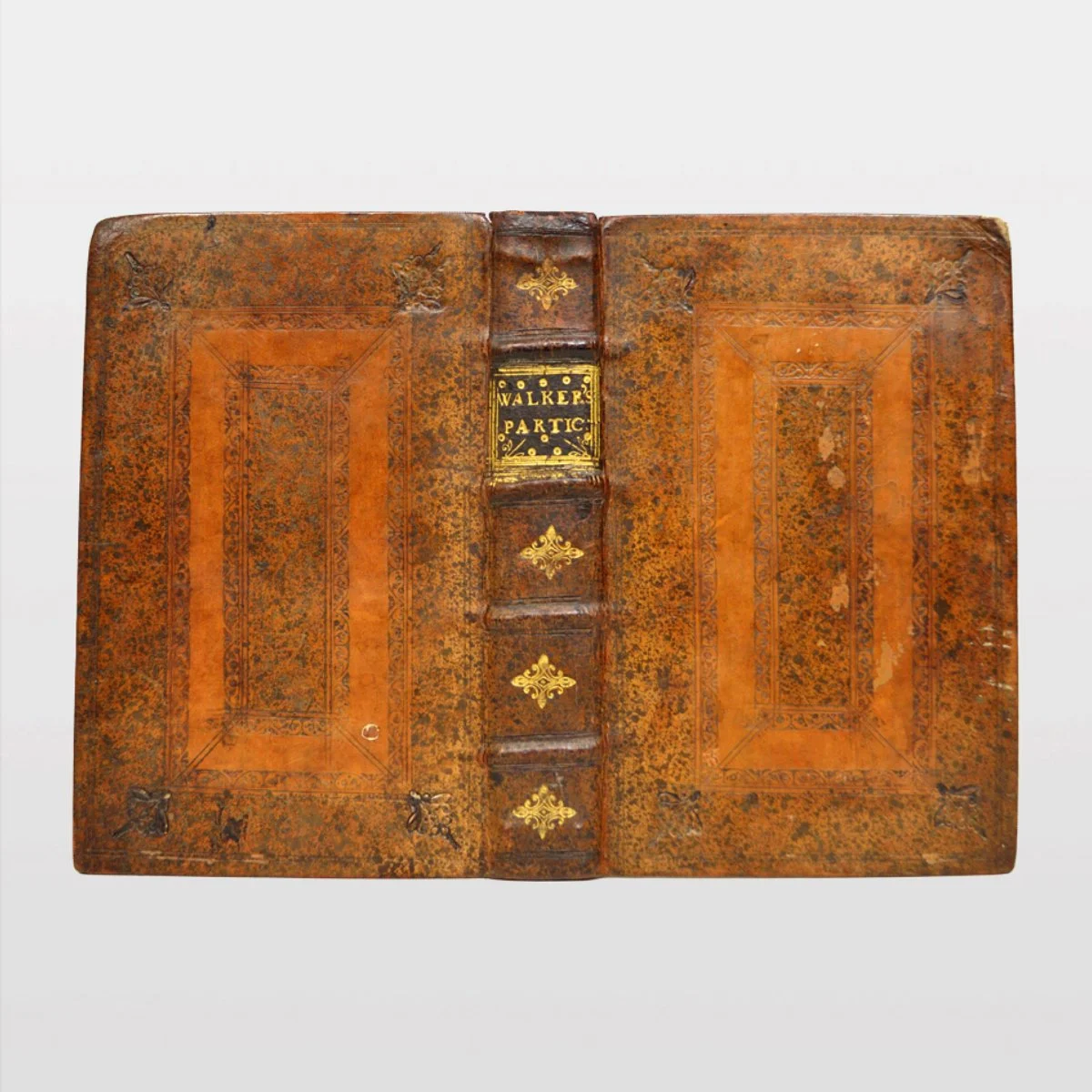 Image 1 of 3
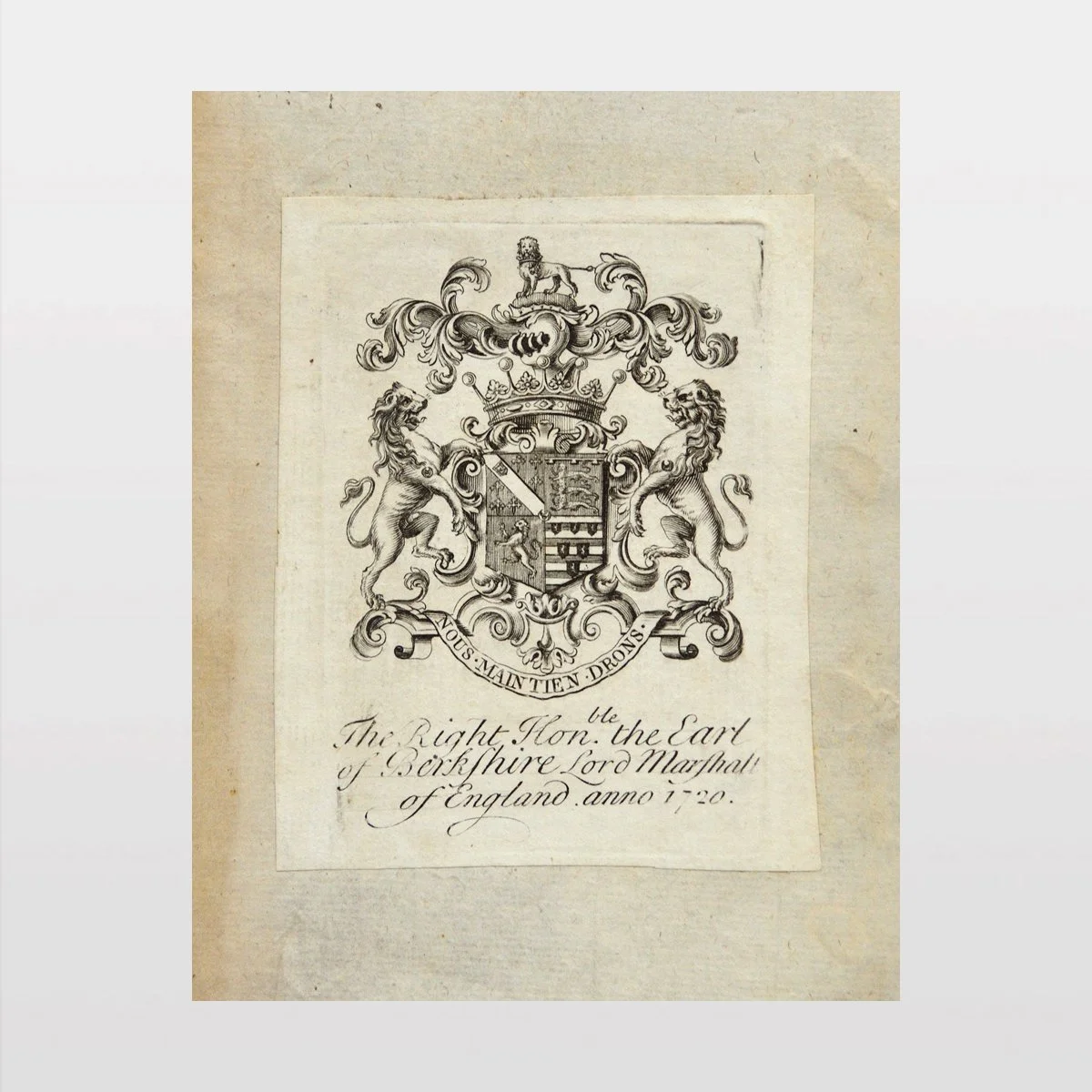 Image 2 of 3
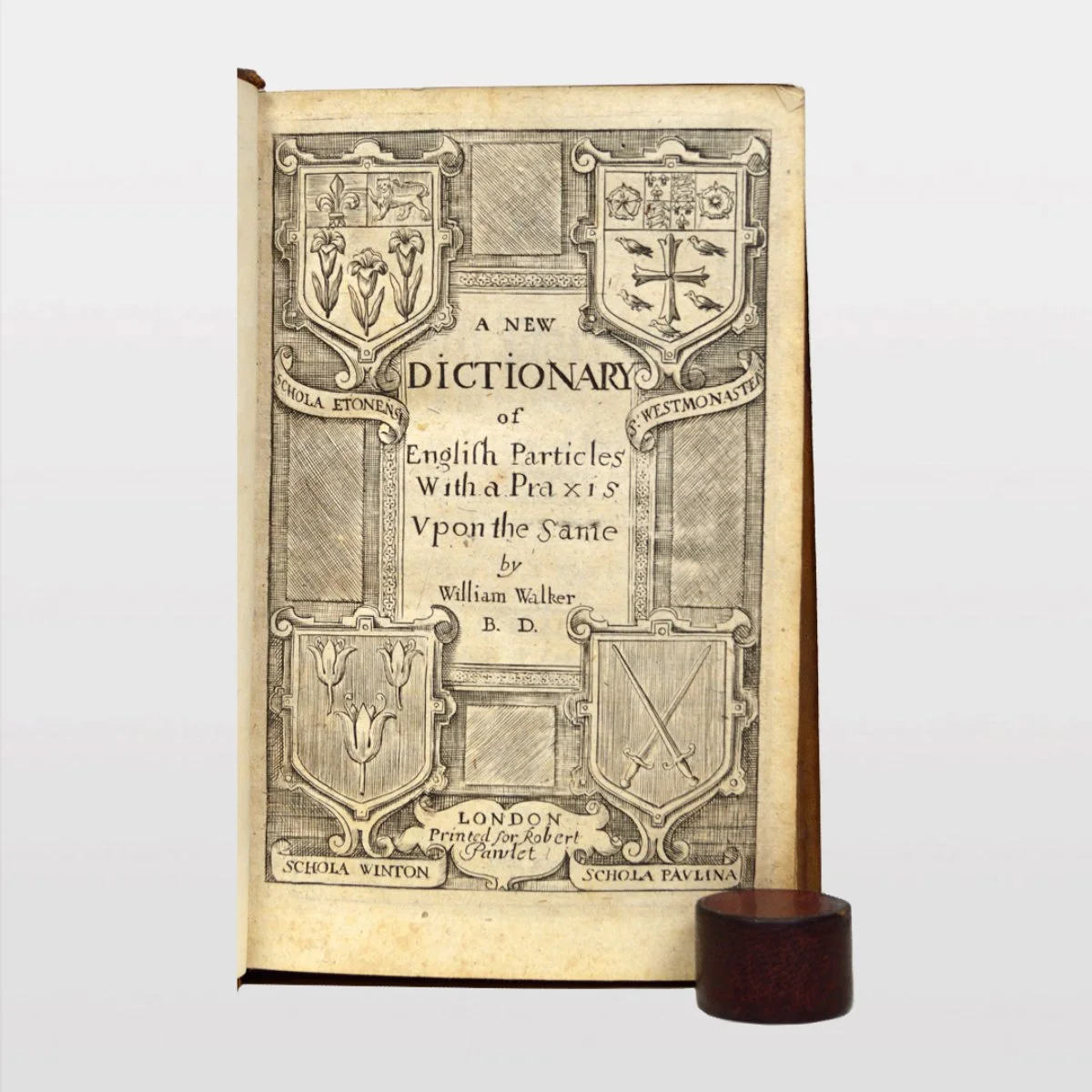 Image 3 of 3
