BOUND BY GEORGE MULLEN, AND PRESENTED TO THE EARL OF HARDWICKE
The Earl of Castlehaven's Review, or his Memoirs of his Engagement and Carriage in the Irish Wars: with Lord Anglesey's Letter. Containing Observations and Reflections Thereon.
8vo. [195 x 116 x 21 mm]. xv, [i], 143, [3], 41, [3] pp. Contemporary binding by George Mullen (with his oval orange label inside the rear cover) of red straight-grained goatskin, the covers with a border of a gilt thick and thin fillet and a repeated blind palmette tool, and a large blind arabesque centre block. The spine divided into five panels with gilt tooled raised bands, lettered in gilt in the second and fourth panels, the others with a radial centre, the corners of the edges of the boards hatched in gilt, the turn-ins with a gilt chain roll, buff endleaves, gilt edges. (A little rubbed in patches).
Dublin: printed by Graisberry and Campbell for George Mullens, Temple-Bar, 1815
The Review or Memoirs was originally published in London in 1680 and 1684 and republished in Waterford in 1753. The Earl of Anglesey's Letter was published in 1681. The Preface refers to "the present very limited impression". A very good copy in a fine binding by George Mullen, who was also the publisher (his name is spelt "Mullens" in the imprint).
According to Lowndes 30 copies were issued on large paper, and two of these, both bound by Mullen, were illustrated as items 205 and 206 in Maggs Bros catalogue 1212. George Mullen was in business at four addresses in Dublin between about 1803 and 1846 as a bookseller, publisher, stationer and bookbinder. Most of his best bindings seem to have been produced between 1812 and 1820 using combinations of gold and blind tooling with a large selection of hand tools and several blocks, on straight-grained goatskins, russia and calf. At this time he must have run a bindery of some size working for the leading Irish collectors, the Marquess of Sligo being one of his major clients. About 1822 he was joined in the business by his son, George Junior. John and Thomas Mullen, presumably relatives, are also listed as bookbinders in the Dublin directories at this time.
This copy is inscribed on the front fly-leaf: "Hardwicke from Mr Campbell Oct. 1821". Philip Yorke (1757-1834) succeeded his uncle as 3rd Earl of Hardwicke in 1790, and inherited his estates, including Wimpole Hall. He served as Lord Lieutenant of Ireland from 1801 until 1805 and supported Catholic emancipation. He was created Knight of the Garter in 1803 and was a fellow of the Royal Society.
Stock no. ebc9276

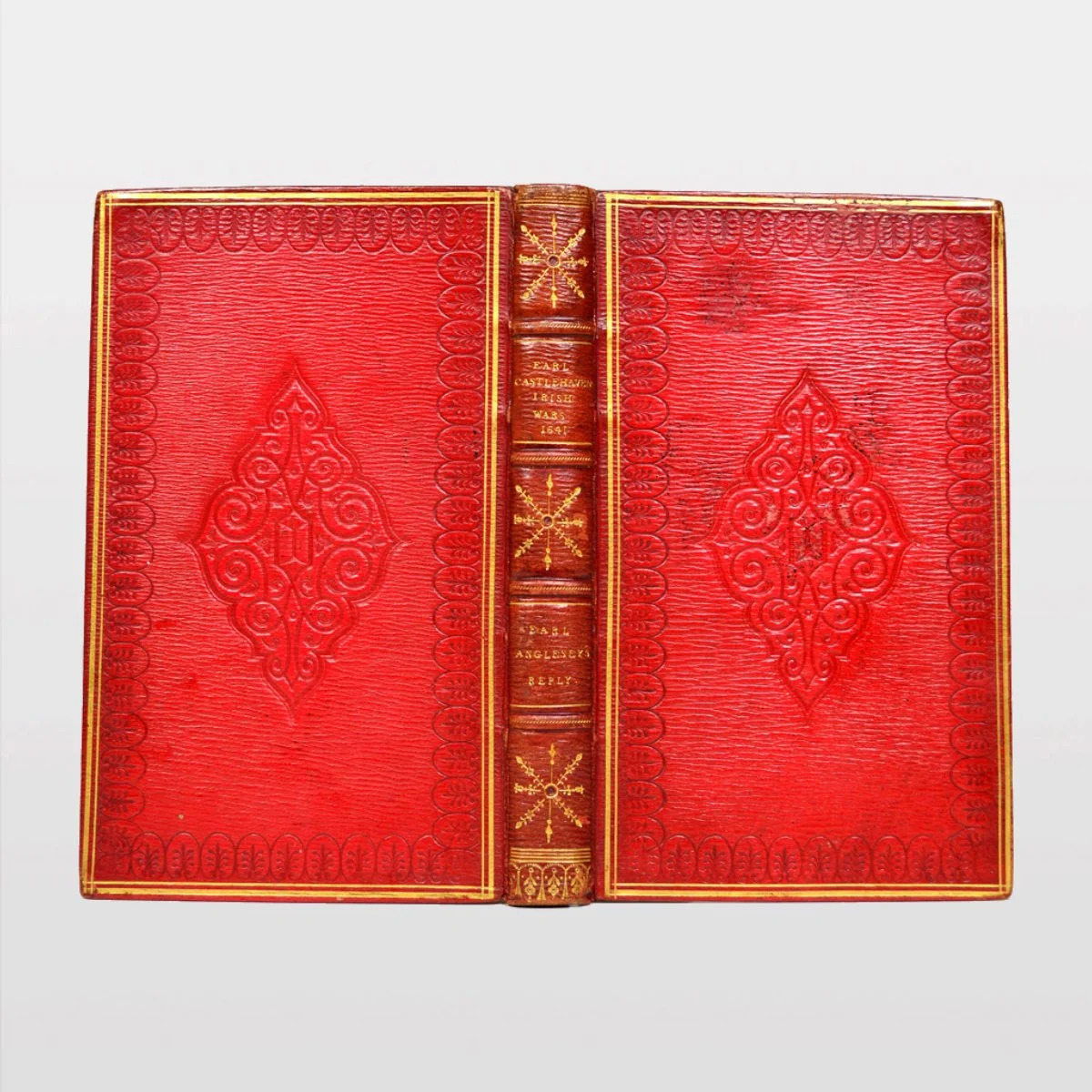 Image 1 of 4
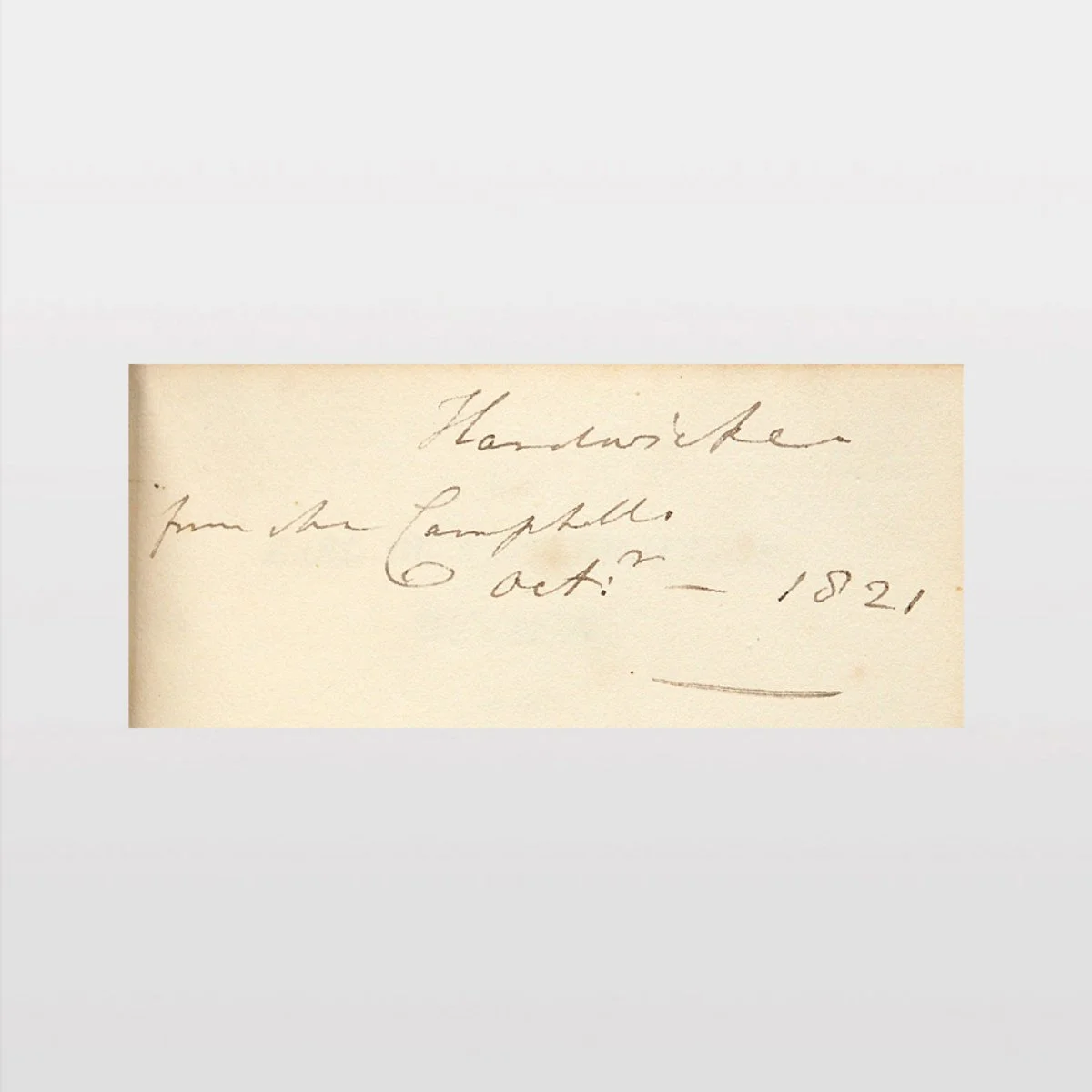 Image 2 of 4
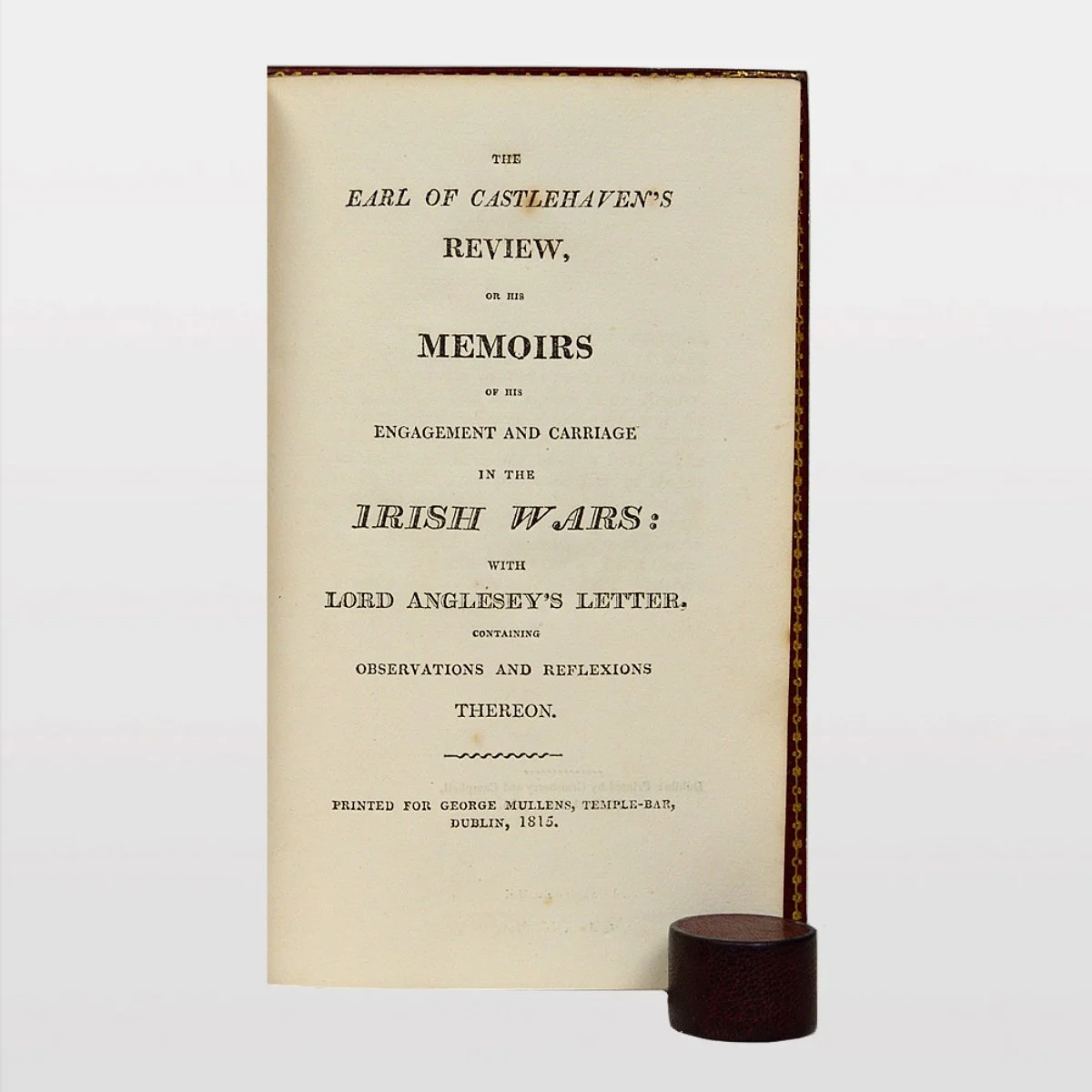 Image 3 of 4
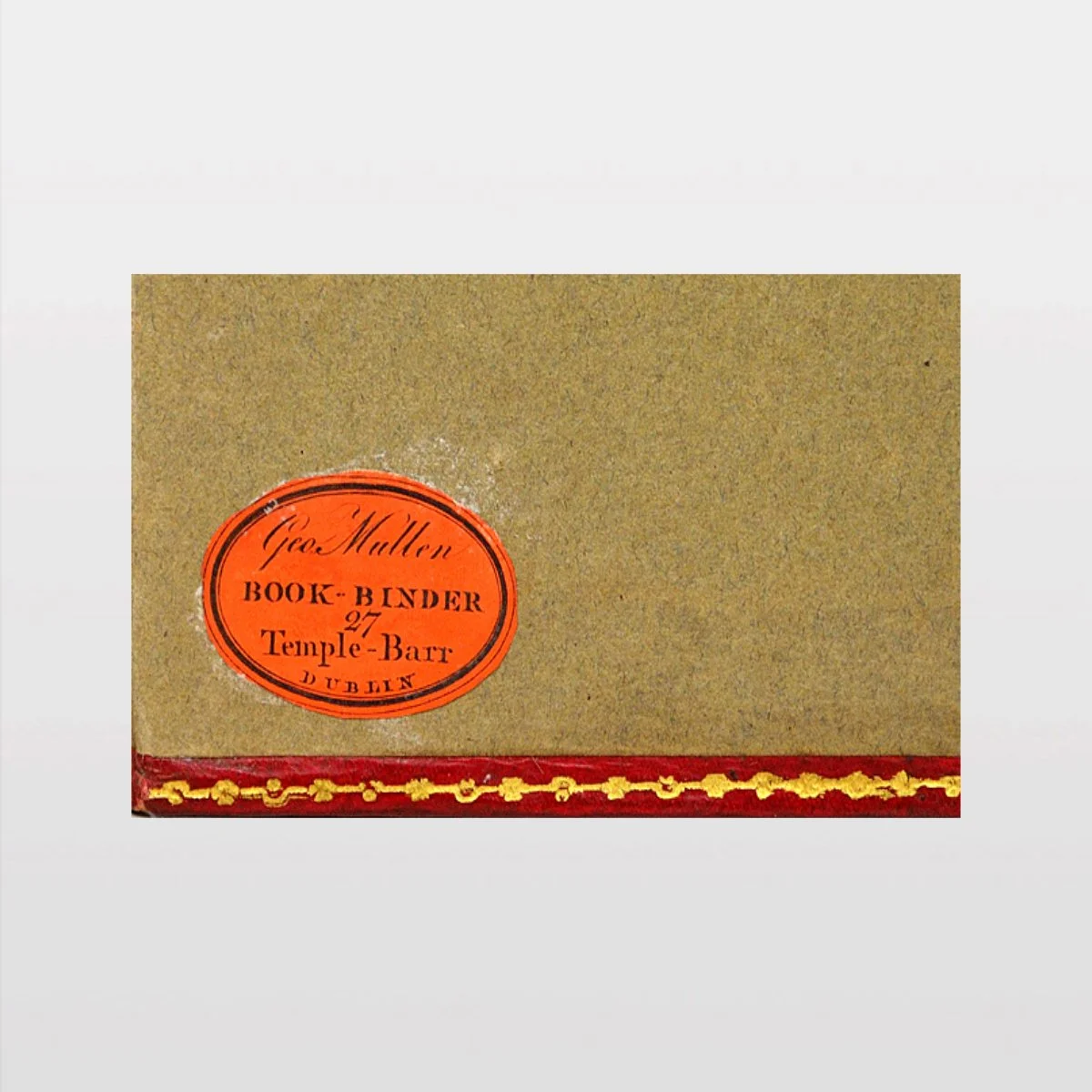 Image 4 of 4
